LaTonya Streeter
Instructional Designer | Learning Experience Designer
Instructional designer with experience creating eLearning, video, and compliance training for system and workforce environments.


Projects
Selected instructional design projects demonstrating eLearning, video, and compliance-focused training developed for system-based and regulated environments.

Information Security Training
Purpose
The purpose of this training was to support organizational information security requirements by helping employees understand and correctly apply security policies in their daily work. The course was designed to reduce risk by reinforcing secure decision-making behaviors rather than policy memorization, ensuring learners could apply guidance in realistic workplace situations.
Role
Instructional Design Architect
Learning strategy and architecture
ADDIE-based design oversight
Assessment and scenario design
Tool selection and development guidance
Design Process (ADDIE-Aligned)
This project followed an ADDIE-based instructional design framework, with my role focused on learning architecture and instructional strategy.
Analysis
Reviewed information security policies, compliance requirements, and stakeholder input to identify high-risk behaviors, performance gaps, and priority learning objectives.
Design
Developed the instructional blueprint, including learning objectives, assessment strategy, and content flow. Created detailed storyboards in PowerPoint to define screen-by-screen structure, scenario logic, and assessment alignment prior to development.
Development
Built the eLearning course in Articulate Rise 360, incorporating structured content, interactions, and assessments. Designed and produced instructional videos using Camtasia, with professional narration generated through Murf AI voice-over to ensure clarity and consistency.
Implementation & Review
Collaborated with subject matter experts to validate accuracy, compliance alignment, and instructional clarity, making refinements as needed to support deployment readiness.
Method of Design
The course used a scenario-based instructional design approach grounded in adult learning principles. Learners engaged with realistic workplace scenarios that required applying information security policies to make appropriate decisions.
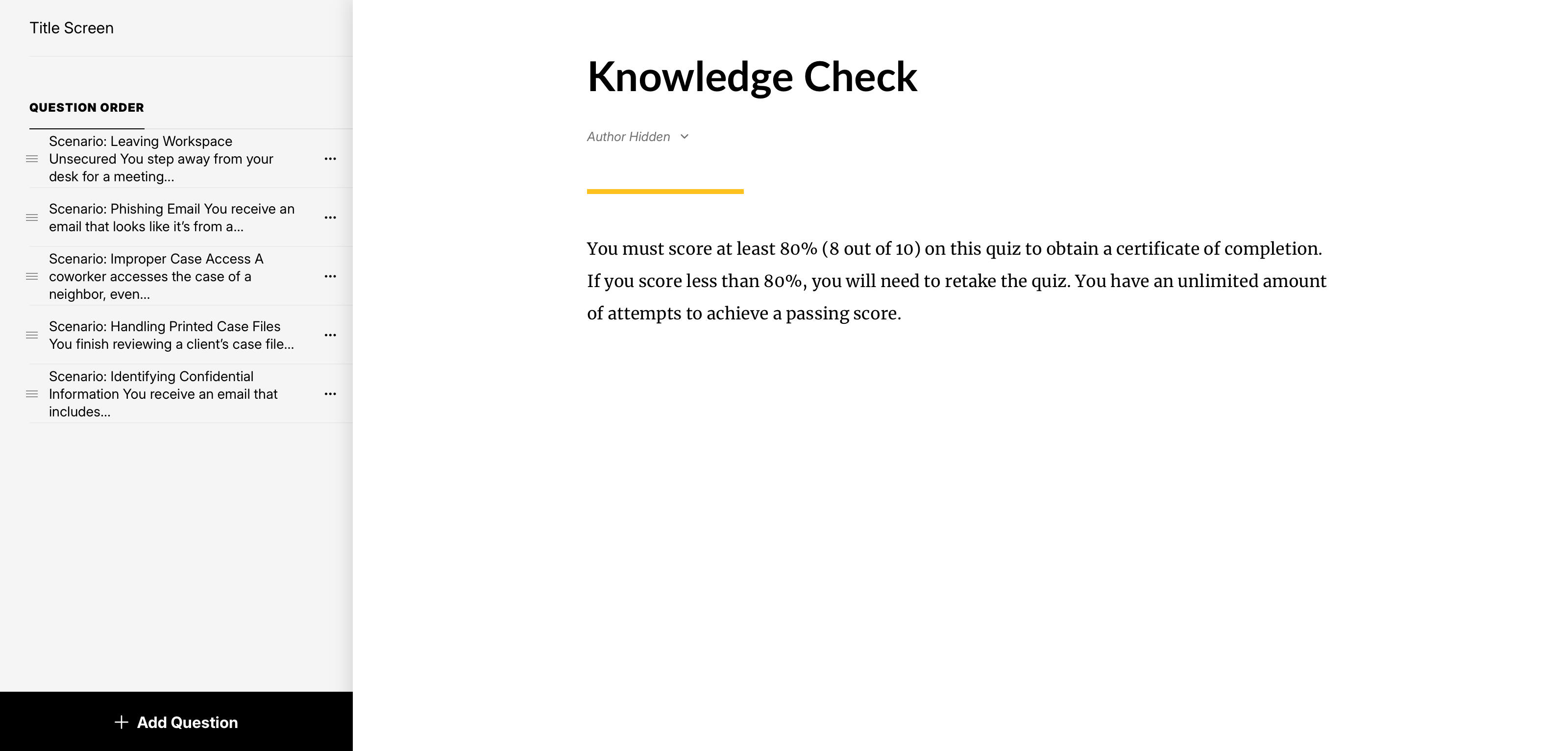
Understanding was measured through a five-question scenario-based knowledge check with an 80% mastery requirement, reinforcing correct behaviors and ensuring learners demonstrated applied understanding. Immediate feedback was provided to support learning reinforcement.
The training was intentionally designed to be scalable and maintainable, allowing future updates to policy or system changes without redesigning the entire course.
Tools & Technologies
PowerPoint – Instructional storyboarding and design planning
Articulate Rise 360 – eLearning development
Camtasia – Video creation and editing
Murf AI – Voice-over narration


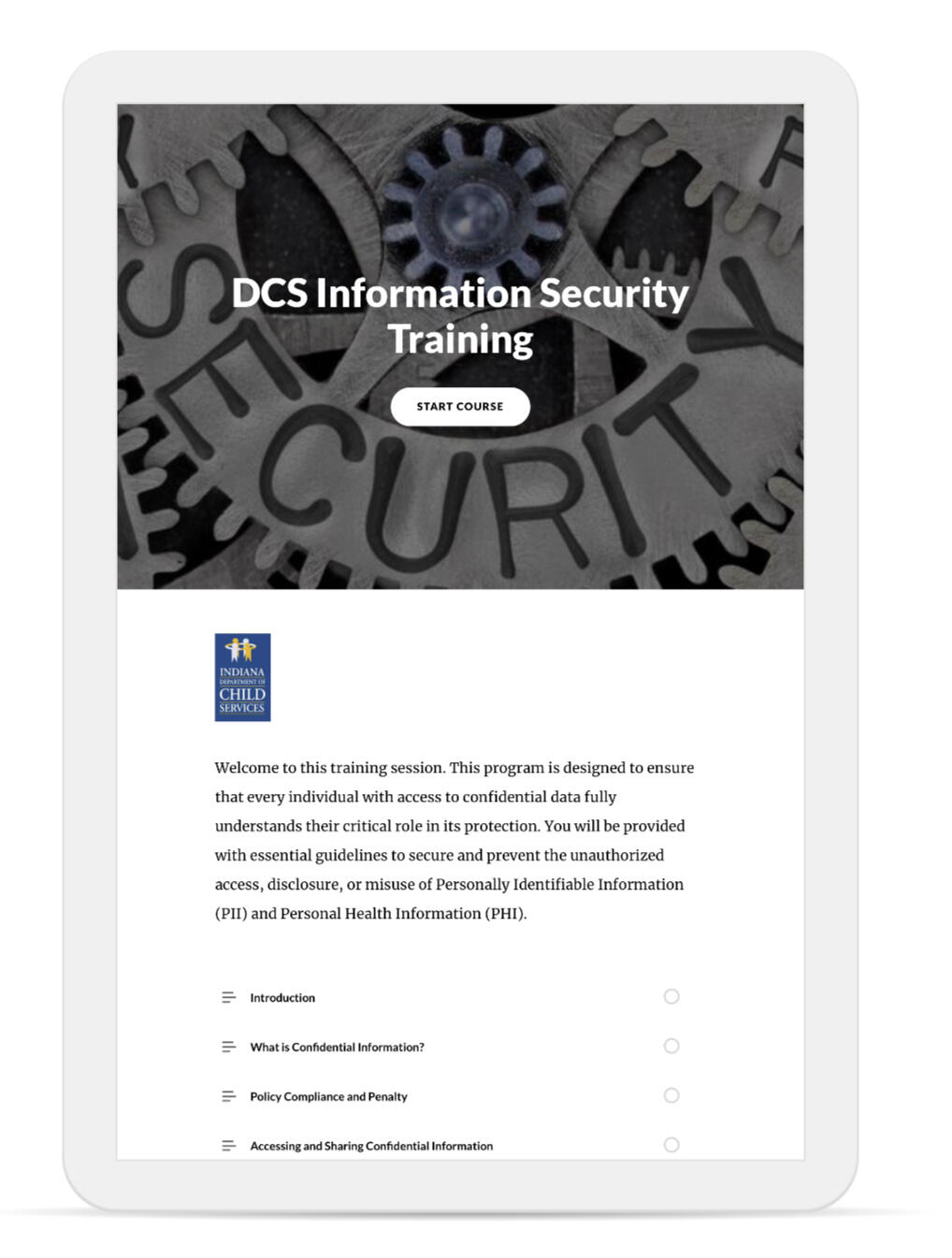
Rise 360 Mobile Start Menu

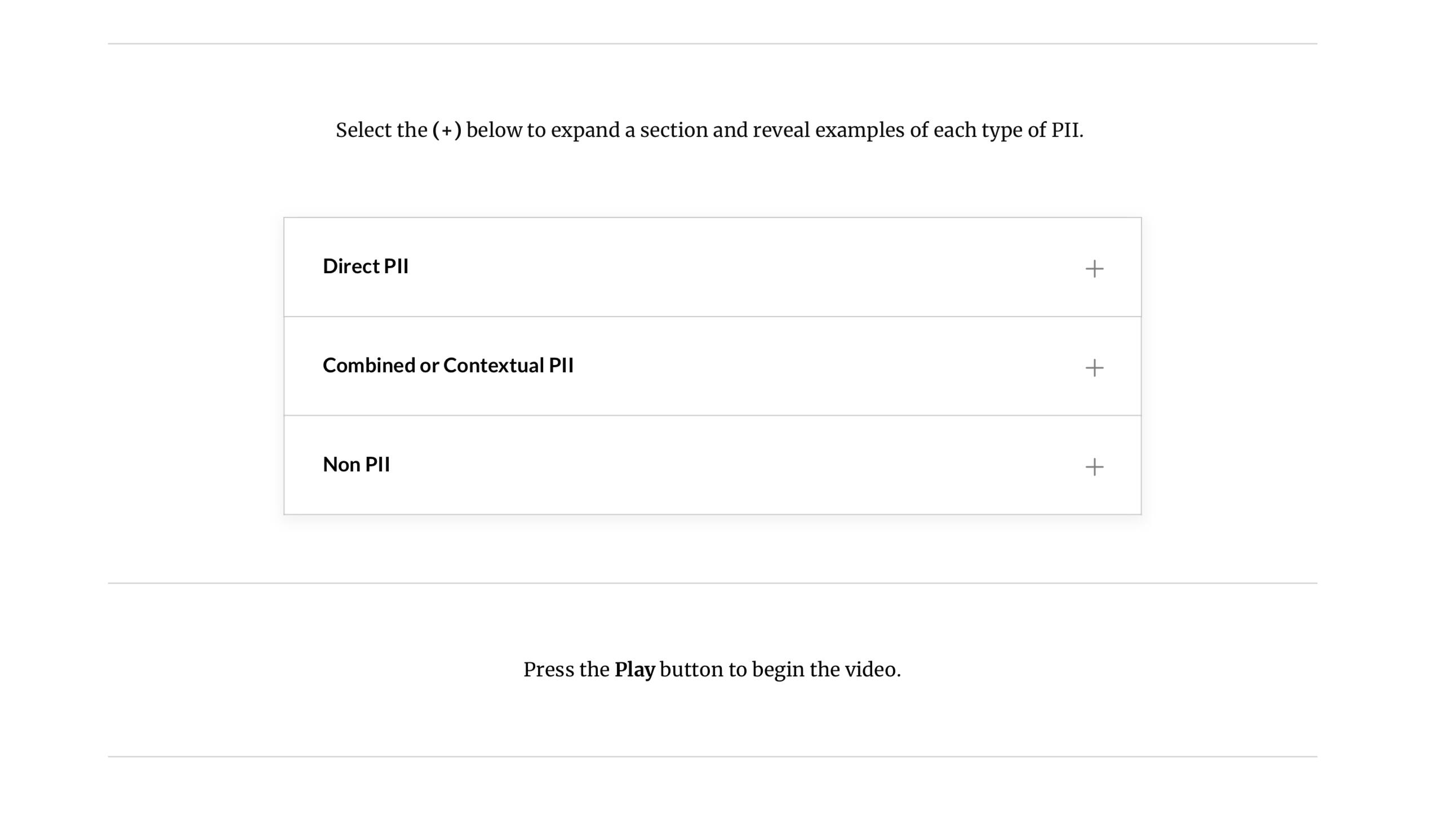
Accordion Interaction

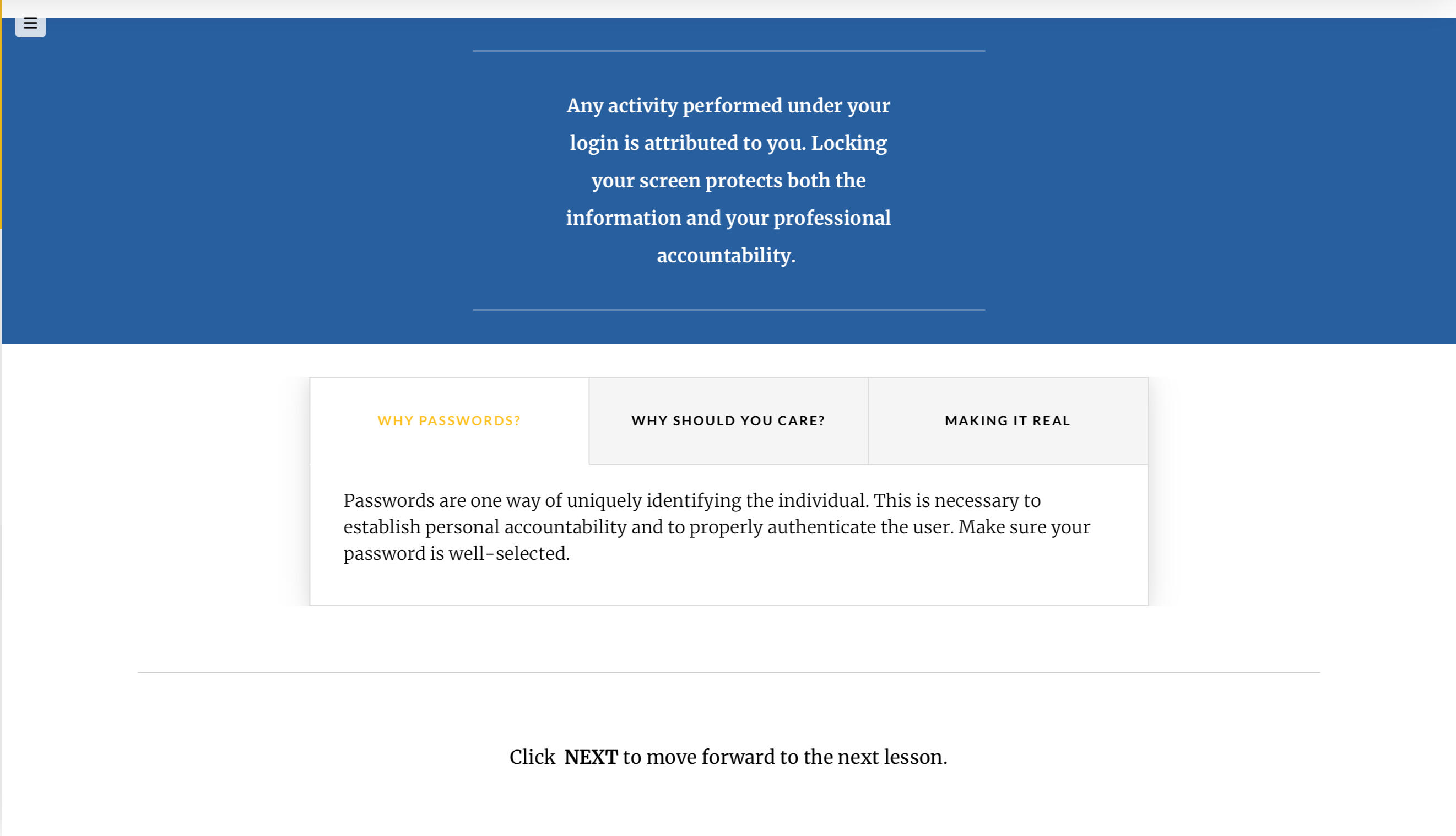
Interaction

Knowledge Check

Downloadable Deliverable

Dashboard Training (Virtual Instructor-Led)
Purpose
The purpose of this training was to support effective adoption and use of a data dashboard by enabling learners to navigate the system, interpret key information, and apply insights to their work. The solution was designed to support live, facilitated learning while providing post-training performance support through a user desk guide.
Role
Instructional Design Architect
Learning strategy and instructional flow
VILT design and facilitation structure
Performance support design (desk guide)
Stakeholder collaboration and content validation
Design Process
This training followed a structured instructional design process with an emphasis on facilitated learning and performance support.
Analysis
Identified learner roles, common dashboard use cases, and areas where users typically struggled with interpretation or navigation. Learning objectives were defined based on real workflow needs rather than system features alone.
Design
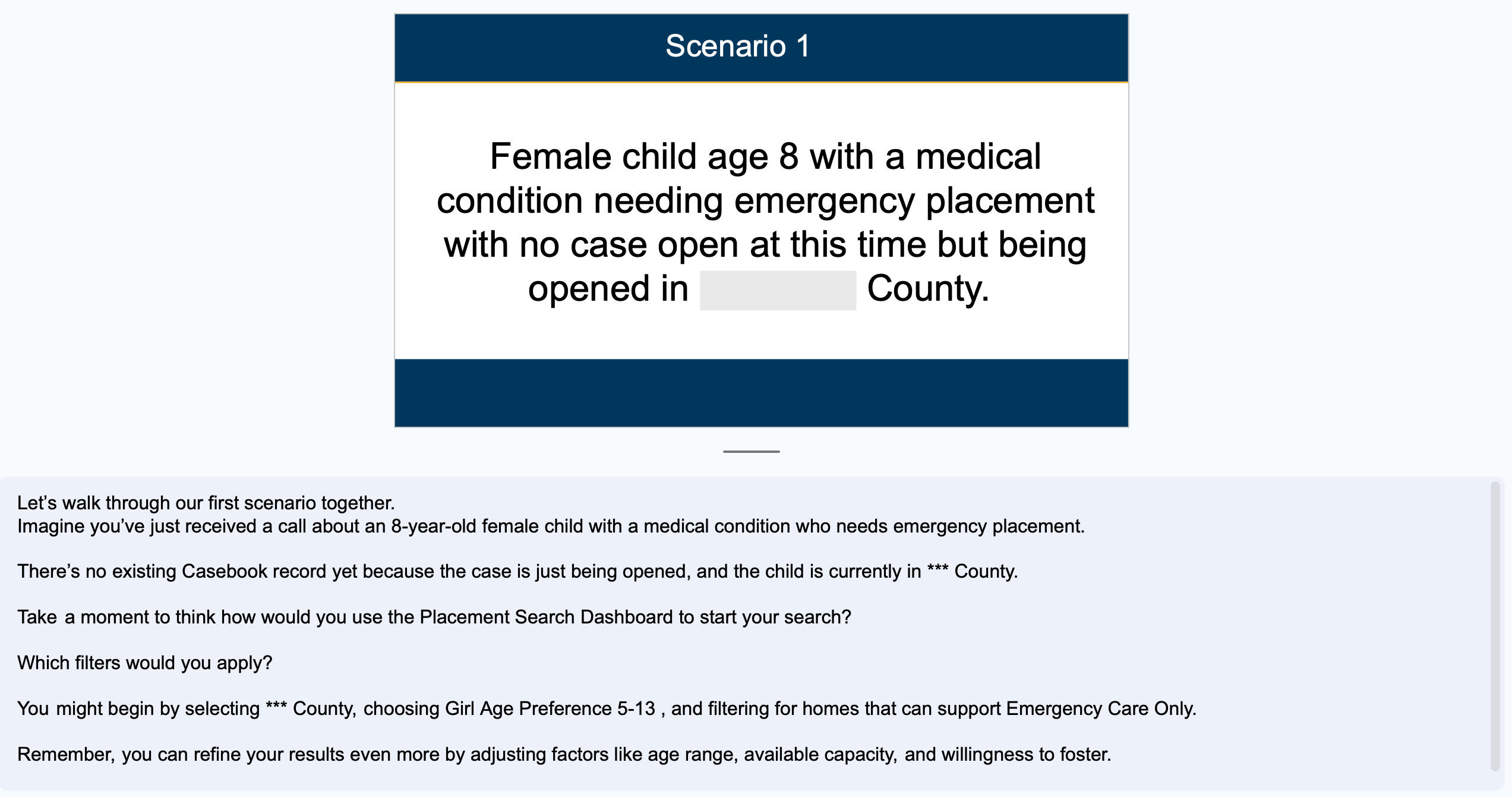
Architected a virtual instructor-led training (VILT) module that paired real-time system demonstration with guided explanation and discussion. Developed PowerPoint slides to serve as a trainer guide, outlining instructional flow, key talking points, and transition cues while the trainer walked through the live system.
Development
Created facilitator-supporting materials using Microsoft PowerPoint and Microsoft Word, including structured presentation content and a user desk guide. Snagit was used to capture annotated screenshots to visually reinforce key steps and dashboard elements. Adobe tools were used to refine visuals and improve clarity and consistency across materials.
Review and Refinement
Collaborated with stakeholders to validate instructional accuracy and usability, refining materials to ensure alignment with system behavior and learner needs.
Method of Design
This training used a blended instructional design approach, combining virtual instructor-led facilitation with job-embedded performance support.
During live sessions, the trainer used PowerPoint as a guidance framework rather than a static presentation, allowing for structured narration while navigating the dashboard in real time. This approach supported learner engagement and ensured consistent delivery across sessions.
The user desk guide was designed as a follow-up resource, enabling learners to independently complete key tasks after training without relying on memory alone.

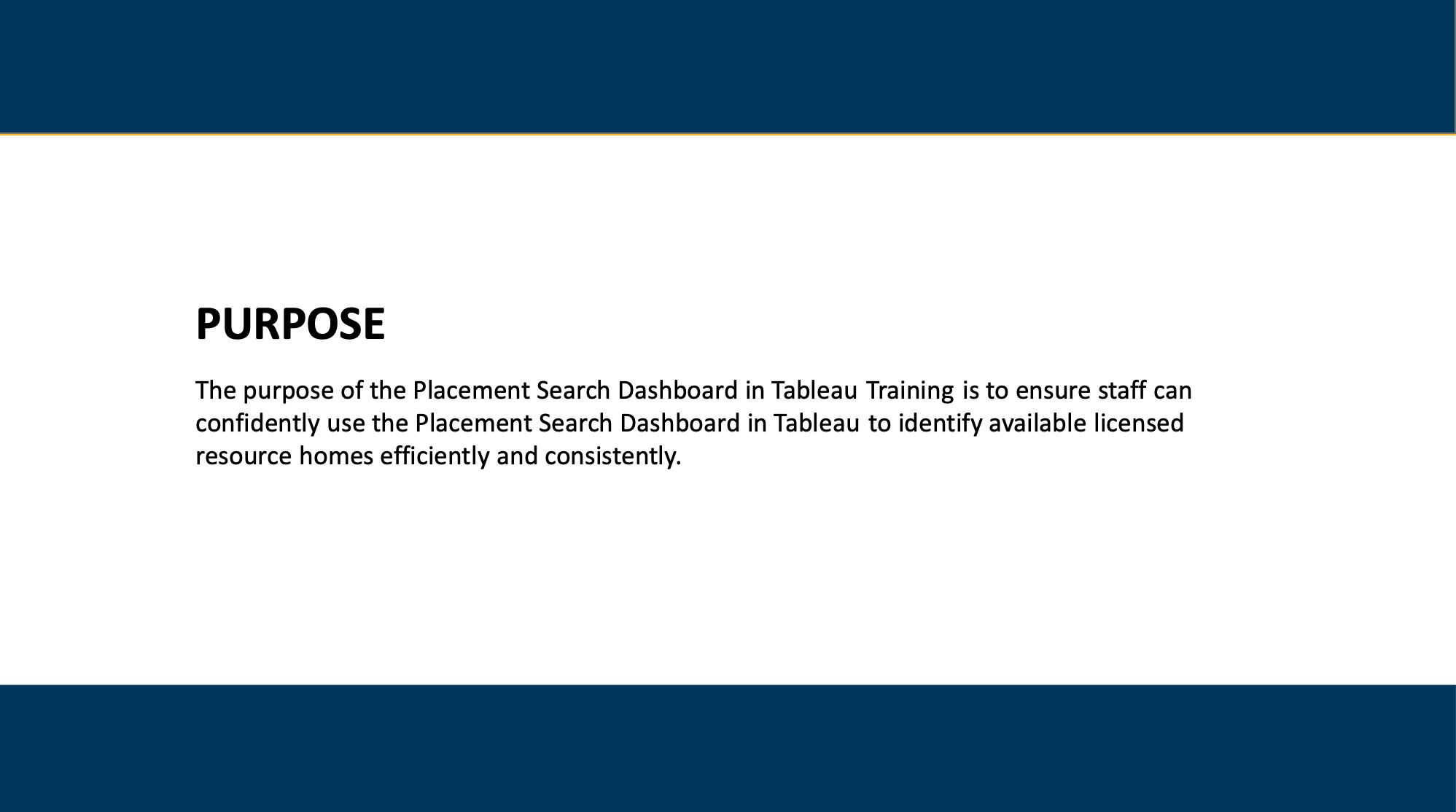
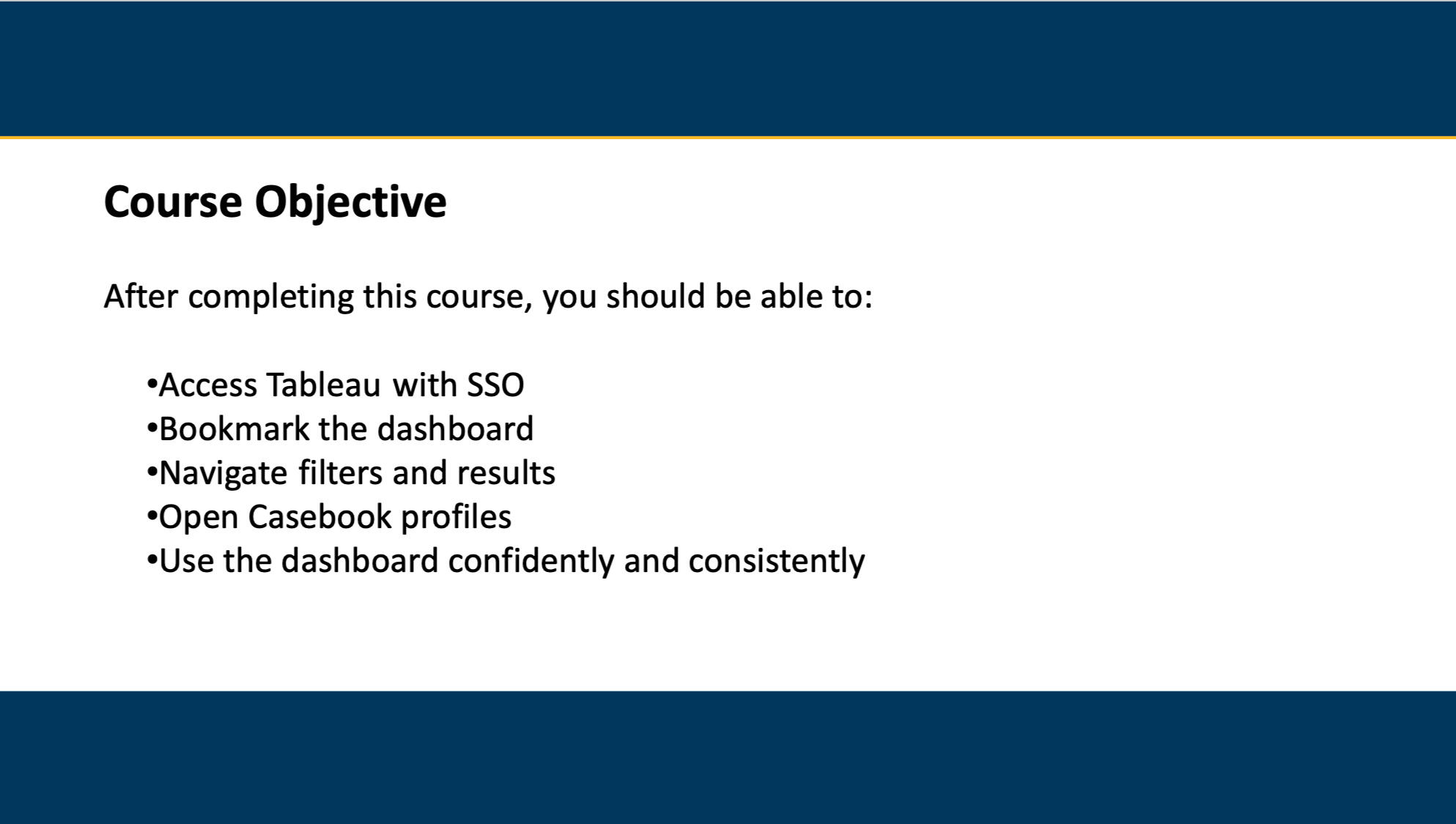
Purpose of Training

Training Overview

Single Sign-on Walk Through

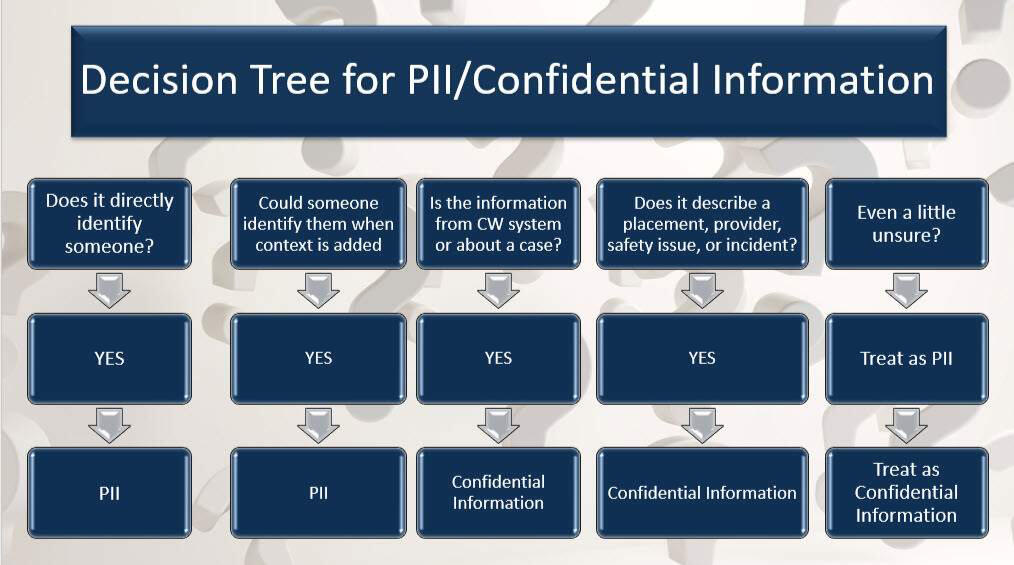
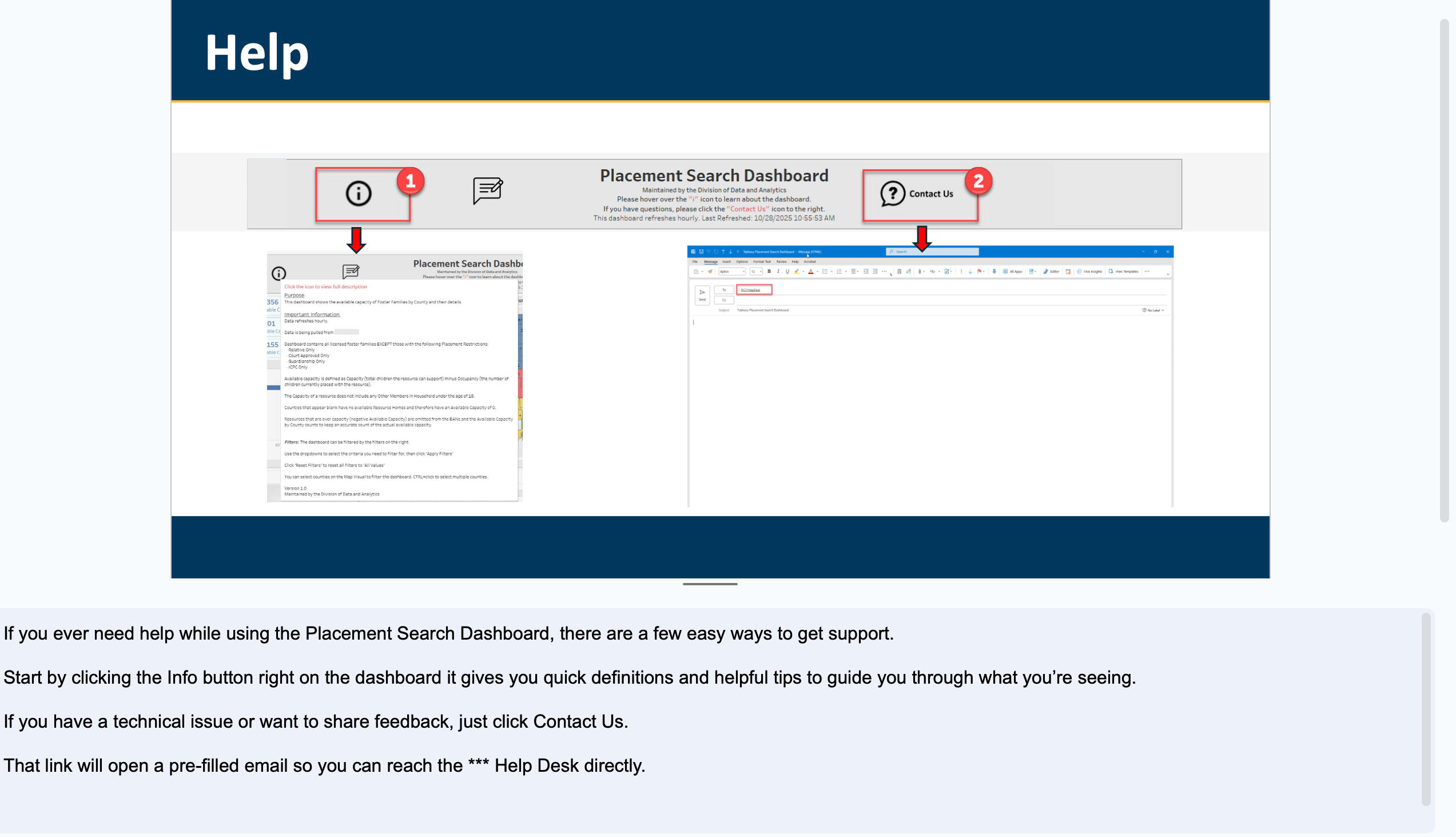
Dashboard Walk Through for Help with trainer scripting

Scenario Practice Slide

Deliverables
Learning strategy and instructional flow
VILT design and facilitation structure
Performance support design (desk guide)
Stakeholder collaboration and content validation
Tools
Microsoft PowerPoint – Trainer guidance and instructional flow
Microsoft Word – User desk guide development
Snagit – Screenshot capture and annotation
Adobe – Visual refinement and layout support
Learning & Development Consulting Case Study
Designing Scalable Training for System Adoption
Client Context
An organization required structured training to support adoption of a new system and related workflows. Existing training materials were inconsistent and heavily reliant on informal knowledge transfer, resulting in uneven user understanding and frequent support requests.
The engagement focused on designing a learning solution that could support virtual delivery, consistent facilitation, and post-training performance support.
Business Challenge
Users struggled to confidently navigate and interpret system information
Training delivery varied by facilitator, impacting consistency
Learners lacked reference materials to support on-the-job application after training
Stakeholders needed a solution that was scalable and maintainable
Consulting Approach
As a learning and development consultant, I focused on learning architecture and solution design rather than isolated content creation.
The approach included:
Clarifying performance expectations and learner roles
Designing training that supported live facilitation while minimizing cognitive overload
Ensuring learning extended beyond the live session through performance support
An ADDIE-based framework was used to guide analysis, design, development, and validation.
Solution Design
The final solution was a blended learning model consisting of:
A virtual instructor-led training (VILT) module structured to support real-time system walkthroughs
Trainer-guided PowerPoint materials used as a facilitation framework rather than a static slide presentation
A user desk guide developed as a post-training reference to support independent task completion
This design allowed facilitators to engage learners during live sessions while ensuring consistent delivery across audiences.
Method of Design
The learning solution emphasized:
Demonstration and guided explanation during live sessions
Opportunities for learner questions and clarification
Visual reinforcement through annotated screenshots
Post-training performance support to reduce reliance on memory
By separating facilitation guidance from learner reference materials, the solution supported both instructional quality and long-term usability.
Outcomes
Improved consistency across virtual training sessions
Clearer expectations for both facilitators and learners
Reduced reliance on follow-up support due to availability of desk guides
A scalable training model that could be reused and updated as systems evolved
Consultant Role
Learning & Development Consultant / Instructional Design Architect
Learning strategy and solution architecture
ADDIE-based design oversight
VILT structure and facilitation guidance
Performance support design
Stakeholder collaboration and validation
About
I am an instructional designer with experience developing eLearning, video, and compliance-driven training for system-based and regulated environments. My work focuses on translating complex policies, processes, and technical information into clear, practical learning experiences that support on-the-job performance.
I have led training efforts from analysis through development, including storyboarding, content design, multimedia development, and assessment creation, while collaborating closely with subject matter experts and stakeholders. My approach emphasizes clarity, learner usability, and instructional integrity, particularly in environments where accuracy, consistency, and governance are critical.
I specialize in designing training that is scalable, maintainable, and aligned to organizational standards, ensuring learning solutions remain effective beyond initial deployment.

Contact
If you have questions about my work or would like to discuss instructional design opportunities, please use the form below or contact me via email or LinkedIn.
Thank you
For inquiries, please contact me via email or LinkedIn.